
|
|
If we need to install lifting equipments in places where cranes can not access, a derrick should be the choice. For instance in photo 1, due to a soft access road -sometimes, the lack of a road-, or as in photo 2, the concrete plate at ground level has not enough support where it is supposed that a crane should circulate.
A derrick consists on:
a) a Boom that lifts the hook and the load,
b) a Mast supporting the boom with a topping lift,
c) guys, which consist on cables anchored at a fair distance from the mast.
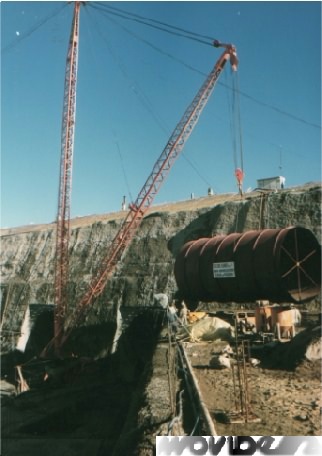
Photo 1: Erection of a 30 ton piece of a piping system - tubería de agua forzada - Casa de Piedra, Argentina.
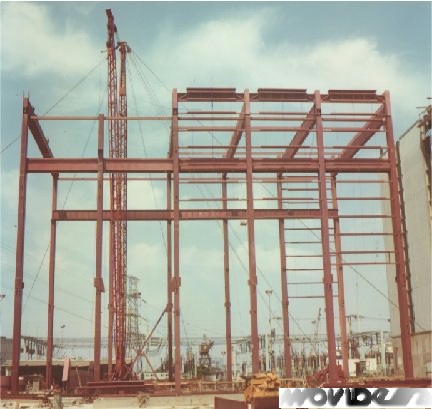
Photo 2: Electric Power Plant Building - Buenos Aires, Argentina.
A derrick can lift a heavier load at a greater radius than a crane with an equivalent nominal lifting capacity. This is due to the system of forces of the derrick.
To compare with a crane, if we do not take into account the boom's weigh, the force of compression N in the derrick's boom is:
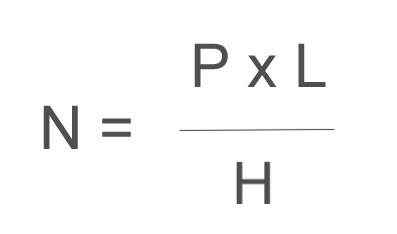
Where:
P: Load to be lifted
L: boom's length
H: mast's heigh
The first remark is that we do not depend on the radius R. This means that we are not affected by the distance to wich we lift the load, at least in theory. This is totally different with the cranes, where the flexural moment of the boom is the critical stress.
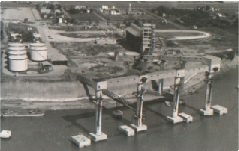
This advantage made that a derrick-type system was adopted in this steel erection over water.
Here the mast is the concrete column itself, and no longer the guys or anchorages are necessary. The steel structure was transported to the place where it was to be lifted on the white tanks that we see half-submerged in this image.
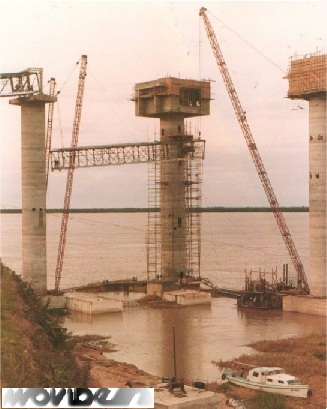
Galería de transferencia, Port of San Lorenzo, Argentina.
Of couse that the boom's self weight does affect its lifting capacity, due to the flexural moment at half length, wich limits the load radius that can be used. But not as much as in the case of the crane, where the moment is the main and determinant stress.
To avoid most of the boom's self weight flexural moment, sometimes it is used a pulley's system - or even a single line - from the top of the mast to the middle of the boom's length. This gives an elastic support in the middle of the boom.
We have to consider also external forces, i.e. wind, and an impact coefficent due to dynamic forces, as it is common to use in crane's design. Usually the capacity of a crane is ranked at 75% of the static load resistance - in certain norms at 85%.
Note: to consult about derricks, we suggest "Guide for the Analysis of Guy and Stiffleg Derricks", American Institute of Steel Construction (AISC).